
Online service
Service hours: Monday to Saturday 9:00-18:00
Please choose online customer service:
Please choose online customer service:
0755-83483730 / 23823366
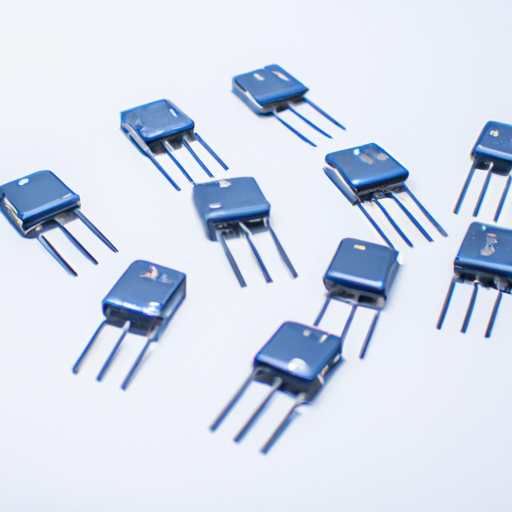
Chip inductors are passive electronic components that store energy in a magnetic field when electrical current flows through them. They are typically small, surface-mount devices (SMDs) designed for use in compact electronic circuits. Chip inductors are essential in various applications, including filtering, energy storage, and signal processing.
In the rapidly evolving world of electronics, chip inductors play a crucial role in ensuring the efficient operation of devices. They are integral to power management systems, RF circuits, and signal integrity applications. As devices become smaller and more complex, the demand for high-performance chip inductors continues to grow.
This article aims to provide an overview of popular chip inductor product models from leading manufacturers. By exploring their specifications, applications, and key features, readers will gain insights into selecting the right chip inductor for their specific needs.
Inductance is the property of an electrical conductor that opposes changes in current. When current flows through a coil of wire, it generates a magnetic field around it. If the current changes, the magnetic field also changes, inducing a voltage that opposes the change in current. This phenomenon is known as self-inductance.
Inductors are used in various applications, including filtering, energy storage, and oscillation. They can smooth out voltage fluctuations in power supplies, filter out unwanted frequencies in signal processing, and store energy in switching power supplies.
Ferrite core inductors use a ferrite material to enhance inductance and reduce losses. They are commonly used in high-frequency applications due to their ability to maintain performance at elevated frequencies.
Air core inductors do not use a magnetic core, which makes them suitable for high-frequency applications where core losses would be detrimental. They are typically larger than ferrite core inductors and are used in specialized applications.
Multilayer inductors consist of multiple layers of conductive and insulating materials, allowing for compact designs with high inductance values. They are widely used in mobile devices and other compact electronics.
The inductance value, measured in henries (H), indicates the inductor's ability to store energy. It is a critical specification that determines the inductor's performance in a circuit.
The current rating indicates the maximum current the inductor can handle without overheating or saturating. Exceeding this rating can lead to performance degradation or failure.
DC resistance is the resistance of the inductor when a direct current flows through it. Lower DCR values are preferred for higher efficiency, as they result in less power loss.
The self-resonant frequency is the frequency at which the inductor's reactance equals its resistance, causing it to behave like a resonant circuit. It is essential to consider SRF when designing circuits to avoid unwanted resonances.
The LQW15AN series from Murata features compact, high-performance inductors with inductance values ranging from 1.0 µH to 10 µH. They are designed for applications in mobile devices and other compact electronics, offering low DCR and high current ratings.
The LQW18A series is another popular choice, with inductance values from 1.0 µH to 100 µH. These inductors are suitable for power supply circuits and RF applications, providing excellent performance in a small footprint.
TDK's MLP series offers a wide range of inductors with inductance values from 1.0 µH to 1000 µH. They are known for their low DCR and high current ratings, making them ideal for power management applications.
The CLF series features inductors designed for high-frequency applications, with inductance values ranging from 1.0 µH to 100 µH. They are suitable for RF circuits and provide excellent performance in compact designs.
Vishay's IHLP series is known for its low-profile design and high current ratings. With inductance values from 1.0 µH to 1000 µH, these inductors are ideal for power supply applications and energy storage.
The 1210 series from Vishay offers a range of inductors with inductance values from 1.0 µH to 100 µH. They are suitable for various applications, including filtering and energy storage.
Coilcraft's 0805CS series features compact inductors with inductance values from 1.0 µH to 100 µH. They are designed for high-frequency applications and provide low DCR for improved efficiency.
The 1008CS series offers inductors with inductance values ranging from 1.0 µH to 1000 µH. These inductors are suitable for power management and filtering applications.
Bourns offers a variety of chip inductors suitable for different applications, including power management and RF circuits. Their products are known for reliability and performance.
Wurth Elektronik provides a range of chip inductors with various inductance values and specifications, catering to diverse applications in the electronics industry.
Panasonic's chip inductors are designed for high performance and reliability, making them suitable for various applications, including automotive and industrial electronics.
The frequency range of the application is a critical factor in selecting a chip inductor. Different inductors perform better at specific frequencies, so it's essential to choose one that matches the application's requirements.
In compact electronic devices, size constraints are a significant consideration. Chip inductors come in various sizes, and selecting the right one can help optimize space without compromising performance.
Efficiency is crucial in power management applications. Lower DCR values lead to reduced power loss, making the inductor more efficient.
Thermal management is essential for maintaining performance and reliability. Inductors with better thermal characteristics can handle higher currents without overheating.
Cost is always a consideration in electronic design. While high-performance inductors may offer better efficiency and reliability, they may also come at a higher price.
Investing in reliable components can save costs in the long run by reducing failures and maintenance needs. It's essential to balance initial costs with long-term performance.
As electronic devices continue to shrink, the demand for smaller, high-performance chip inductors will increase. Manufacturers are focusing on miniaturization while maintaining performance in high-frequency applications.
Advancements in materials and design techniques are leading to improved performance characteristics in chip inductors. New materials can enhance efficiency and thermal management, making inductors more suitable for demanding applications.
The rise of emerging technologies such as the Internet of Things (IoT) and 5G networks is driving the need for advanced chip inductors. These technologies require high-frequency, low-loss components to support their performance requirements.
In this article, we explored popular chip inductor product models from leading manufacturers, including Murata, TDK, Vishay, Coilcraft, and others. Each brand offers a range of inductors with varying specifications and applications.
Choosing the right chip inductor is crucial for ensuring optimal performance in electronic circuits. Factors such as inductance value, current rating, and application requirements must be carefully considered.
As technology continues to evolve, staying informed about the latest developments in chip inductor technology is essential. We encourage readers to explore further and consider the best options for their specific applications.
- Manufacturer datasheets and product catalogs
- Industry publications and technical articles
- Murata: [www.murata.com](http://www.murata.com)
- TDK: [www.tdk.com](http://www.tdk.com)
- Vishay: [www.vishay.com](http://www.vishay.com)
- Coilcraft: [www.coilcraft.com](http://www.coilcraft.com)
- Bourns: [www.bourns.com](http://www.bourns.com)
- Wurth Elektronik: [www.wurth-elektronik.com](http://www.wurth-elektronik.com)
- Panasonic: [www.panasonic.com](http://www.panasonic.com)
This comprehensive overview of popular chip inductor product models provides valuable insights for engineers and designers looking to make informed decisions in their electronic designs.