
Online service
Service hours: Monday to Saturday 9:00-18:00
Please choose online customer service:
Please choose online customer service:
0755-83483730 / 23823366
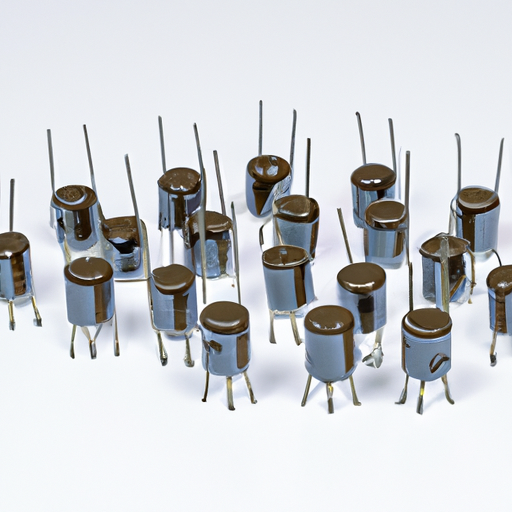
Capacitors are essential electronic components that store and release electrical energy, playing a crucial role in various applications across multiple industries. From consumer electronics to automotive systems and renewable energy technologies, capacitors are integral to the functionality and efficiency of modern devices. As the demand for capacitors continues to grow, understanding the market policies that govern their production, distribution, and consumption becomes increasingly important. This blog post will explore the types of capacitors, market dynamics, regulatory frameworks, market policies, competitive landscapes, and future trends and challenges in the capacitor market.
Capacitors come in various types, each with unique characteristics and applications:
Electrolytic capacitors are polarized components that offer high capacitance values in a compact size. They are commonly used in power supply circuits and audio equipment due to their ability to handle large voltage fluctuations.
Ceramic capacitors are non-polarized and known for their stability and reliability. They are widely used in high-frequency applications, such as RF circuits and decoupling applications in digital devices.
Film capacitors are made from thin plastic films and are known for their low loss and high insulation resistance. They are often used in applications requiring high precision, such as audio equipment and power electronics.
Tantalum capacitors are known for their high capacitance and reliability in compact sizes. They are commonly used in military and aerospace applications, as well as in portable electronics.
Supercapacitors, or ultracapacitors, have a much higher capacitance than traditional capacitors and are used for energy storage applications, such as in electric vehicles and renewable energy systems.
Each type of capacitor has its strengths and weaknesses, making them suitable for specific applications. Understanding these differences is crucial for manufacturers and consumers when selecting the right capacitor for their needs.
The rapid pace of technological advancements in electronics, automotive, and renewable energy sectors has significantly increased the demand for capacitors. Innovations such as electric vehicles and smart grids require advanced capacitor technologies to enhance performance and efficiency.
The growth of industries such as consumer electronics, automotive, and renewable energy is driving the demand for capacitors. As these sectors expand, the need for reliable and efficient capacitors becomes paramount.
The prices of raw materials used in capacitor manufacturing, such as aluminum, tantalum, and ceramic materials, directly impact the overall cost of capacitors. Fluctuations in these prices can lead to changes in capacitor pricing.
Advancements in manufacturing processes can lead to cost reductions, allowing manufacturers to offer competitive pricing. However, the initial investment in new technologies can be significant.
The capacitor market is highly competitive, with numerous players vying for market share. This competition can lead to price wars, affecting profit margins for manufacturers.
The IEC sets international standards for electrical and electronic components, including capacitors. Compliance with these standards ensures safety, reliability, and interoperability of capacitors across different markets.
UL certification is essential for capacitors used in consumer products, as it signifies that the components meet safety and performance standards.
Regulations such as RoHS (Restriction of Hazardous Substances) and REACH (Registration, Evaluation, Authorisation, and Restriction of Chemicals) impose restrictions on hazardous materials used in capacitor manufacturing. Compliance with these regulations is crucial for market access.
National safety standards govern the manufacturing and testing of capacitors to ensure they are safe for use in various applications.
Regulatory compliance can increase manufacturing costs for producers, but it also enhances product safety and reliability for consumers. Understanding these regulations is vital for stakeholders in the capacitor market.
Trade policies, including tariffs and import/export regulations, can significantly impact the capacitor market. Tariffs on raw materials or finished products can affect pricing and availability.
Bilateral and multilateral trade agreements can facilitate smoother trade flows and reduce barriers, benefiting manufacturers and consumers alike.
Many governments provide subsidies and incentives for research and development in the capacitor industry, promoting innovation and technological advancements.
As sustainability becomes a priority, governments are offering incentives for manufacturers to adopt eco-friendly practices, which can influence market dynamics.
Strong intellectual property rights encourage innovation by protecting the interests of inventors and manufacturers. However, navigating patent laws can be complex.
The capacitor market faces challenges related to intellectual property theft and counterfeiting, which can undermine the competitive advantage of legitimate manufacturers.
The capacitor market is dominated by several key players, including companies like Murata Manufacturing, Vishay Intertechnology, and KEMET. These manufacturers hold significant market shares and influence pricing and innovation.
Emerging companies and startups are entering the capacitor market, often focusing on niche applications or innovative technologies, contributing to increased competition.
Mergers and acquisitions are common strategies for companies looking to expand their market presence and capabilities in the capacitor industry.
Collaborations between established manufacturers and startups can lead to innovative solutions and access to new markets.
Ongoing research and development efforts are focused on improving capacitor efficiency, miniaturization, and performance, driving the market forward.
Investments in new materials and designs are crucial for developing next-generation capacitors that meet the evolving needs of various industries.
The demand for smaller, more efficient capacitors is driving innovation in materials and manufacturing processes, leading to the development of advanced capacitor technologies.
Capacitors play a vital role in renewable energy systems, such as solar and wind power, by stabilizing energy storage and improving efficiency.
Global supply chain disruptions, exacerbated by events like the COVID-19 pandemic, pose significant challenges for capacitor manufacturers, affecting production and delivery timelines.
As environmental concerns grow, manufacturers must adapt to sustainable practices and materials to meet regulatory requirements and consumer expectations.
The capacitor market is expected to grow significantly in the coming years, driven by demand from sectors such as automotive, consumer electronics, and renewable energy.
Shifts in consumer preferences towards more sustainable and efficient products will influence the types of capacitors in demand.
In conclusion, the capacitor market is shaped by a complex interplay of technological advancements, regulatory frameworks, market policies, and competitive dynamics. Understanding these factors is essential for stakeholders, including manufacturers, consumers, and policymakers. As the demand for capacitors continues to rise, particularly in emerging technologies and sustainable applications, the future outlook for the capacitor market remains promising. By staying informed about market policies and trends, stakeholders can navigate the challenges and opportunities that lie ahead.
- Academic journals on capacitor technology and market analysis.
- Industry reports from market research firms.
- Regulatory documents outlining standards and compliance requirements.
- Market analysis publications providing insights into trends and forecasts.
This comprehensive exploration of market policies for capacitors highlights the importance of understanding the various factors influencing this critical component's market dynamics. As technology continues to evolve, so too will the policies and practices that govern the capacitor industry.