
Online service
Service hours: Monday to Saturday 9:00-18:00
Please choose online customer service:
Please choose online customer service:
0755-83483730 / 23823366
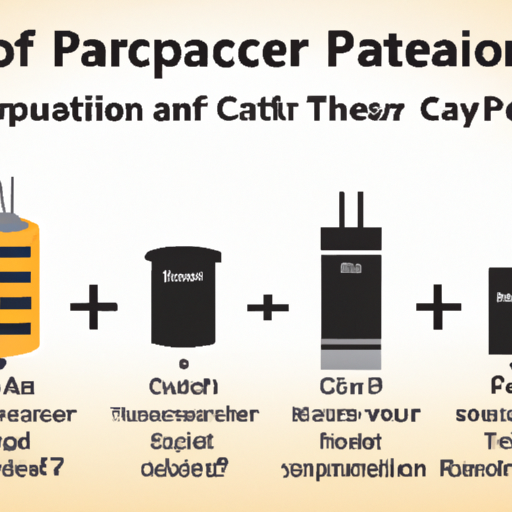
Capacitor compensation is a critical aspect of modern electrical systems, playing a vital role in enhancing the efficiency and stability of power distribution. At its core, capacitor compensation involves the use of capacitors to manage reactive power in electrical networks, thereby improving the overall power factor. This blog post will explore the various product types included in capacitor compensation, their applications, and the importance of these components in maintaining efficient electrical systems.
Reactive power is a concept that arises in alternating current (AC) systems, where it is necessary to maintain the voltage levels required for active power (the power that performs useful work). Reactive power does not perform any work itself but is essential for the functioning of inductive loads such as motors and transformers. The power factor, a measure of how effectively electrical power is being converted into useful work output, is defined as the ratio of active power to apparent power. A power factor of 1 (or 100%) indicates that all the power is being effectively converted into work, while lower values indicate inefficiencies.
Capacitors are devices that store electrical energy in an electric field, and they play a crucial role in power systems by providing reactive power support. By compensating for the lagging reactive power caused by inductive loads, capacitors help to improve the power factor, reduce losses in the electrical system, and enhance voltage stability.
1. **Improved Power Factor**: By adding capacitors to the system, the overall power factor can be improved, leading to more efficient energy use.
2. **Reduced Energy Costs**: A better power factor can result in lower energy bills, as many utility companies impose penalties for low power factors.
3. **Enhanced System Stability**: Capacitor compensation helps to stabilize voltage levels, reducing the risk of voltage sags and swells that can damage equipment.
Fixed capacitors are designed to provide a constant amount of reactive power compensation. They are typically used in applications where the load is relatively stable and predictable, such as in industrial plants with constant motor loads.
**Advantages**:
- Simple installation and operation.
- Cost-effective for stable loads.
**Disadvantages**:
- Limited flexibility; cannot adjust to varying load conditions.
Automatic capacitors, or automatic power factor correction (APFC) systems, adjust the amount of reactive power compensation based on real-time load conditions. These systems use sensors and controllers to monitor the power factor and switch capacitors in and out of the circuit as needed.
**Advantages**:
- Dynamic response to changing load conditions.
- Improved efficiency and reduced energy costs.
**Disadvantages**:
- Higher initial investment and complexity.
Power factor correction capacitors are specifically designed to improve the power factor of electrical systems. They can be either fixed or automatic and are commonly used in industrial and commercial applications.
**Advantages**:
- Significant improvement in power factor.
- Reduction in utility penalties.
**Disadvantages**:
- Potential for overcompensation if not properly sized.
Harmonic filter capacitors are used to mitigate the effects of harmonics in electrical systems. Harmonics are voltage or current waveforms that are multiples of the fundamental frequency and can cause distortion in the power system. These capacitors help to filter out unwanted harmonic frequencies.
**Advantages**:
- Improved power quality and reduced equipment stress.
- Enhanced system reliability.
**Disadvantages**:
- More complex design and installation.
Capacitor banks are assemblies of multiple capacitors connected together to provide a larger amount of reactive power compensation. They can be used for both fixed and automatic compensation.
1. **Fixed Capacitor Banks**: These banks provide a constant level of reactive power and are suitable for applications with stable loads.
2. **Automatic Capacitor Banks**: These systems adjust the amount of reactive power based on real-time load conditions, providing flexibility and efficiency.
Capacitor banks are widely used in industrial, commercial, and utility applications to improve power factor, reduce energy costs, and enhance system stability.
- Increased reactive power capacity.
- Improved voltage regulation.
- Enhanced overall system efficiency.
1. **Manufacturing Facilities**: Capacitor compensation is essential in manufacturing plants where large motors and inductive loads are prevalent.
2. **Motor Drives**: Capacitors help to improve the power factor of motor drives, reducing energy costs and improving efficiency.
1. **Office Buildings**: Capacitor compensation can help reduce energy costs in office buildings by improving the power factor.
2. **Retail Spaces**: Retail environments with various electrical equipment can benefit from capacitor compensation to enhance energy efficiency.
1. **Transmission and Distribution Systems**: Utilities use capacitor compensation to manage reactive power in their networks, improving overall system reliability.
2. **Renewable Energy Integration**: Capacitor compensation plays a role in integrating renewable energy sources, helping to stabilize voltage levels and improve power quality.
While capacitor compensation is beneficial, overcompensation can lead to issues such as voltage rise and resonance, which can damage equipment and reduce system reliability.
Regular maintenance and monitoring of capacitor systems are essential to ensure optimal performance and prevent failures.
The environmental impact of capacitor systems, including the disposal of old capacitors and the use of environmentally friendly materials, should be considered.
Compliance with industry standards and regulations is crucial for the safe and effective operation of capacitor compensation systems.
Advancements in capacitor technology, such as improved materials and designs, are enhancing the performance and efficiency of capacitor compensation systems.
The integration of capacitor compensation with smart grid technology allows for real-time monitoring and control, improving overall system efficiency.
As the demand for sustainable energy solutions grows, capacitor compensation will play a vital role in optimizing the performance of renewable energy systems.
In conclusion, capacitor compensation is a vital component of modern electrical systems, providing numerous benefits such as improved power factor, reduced energy costs, and enhanced system stability. Understanding the various product types involved in capacitor compensation, including fixed and automatic capacitors, power factor correction capacitors, and harmonic filter capacitors, is essential for selecting the right solutions for specific applications. As technology continues to advance, the future of capacitor compensation looks promising, with opportunities for greater efficiency and integration with sustainable energy solutions.
A comprehensive list of academic journals, articles, and industry standards can be provided for further reading on capacitor compensation and its applications in electrical systems.