What are the product features of motor driver?
Title: Exploring the Essential Product Features of Motor DriversIntroduction (100 words) Motor drivers play a crucial role in controlling and powering various types of motors, enabling them to function efficiently and effectively. These devices are widely used in industries such as robotics, automotive, and manufacturing. In this article, we will delve into the essential product features of motor drivers, highlighting their significance and impact on motor performance. By understanding these features, engineers and enthusiasts can make informed decisions when selecting the appropriate motor driver for their specific applications.1. Voltage and Current Ratings (200 words) One of the primary considerations when choosing a motor driver is its voltage and current ratings. These ratings determine the maximum voltage and current that the motor driver can handle. It is crucial to match these ratings with the motor's requirements to ensure optimal performance and prevent damage. Higher voltage and current ratings allow for more powerful motors to be controlled, while lower ratings are suitable for smaller motors.2. Motor Type Compatibility (200 words) Motor drivers are designed to work with specific motor types, such as DC motors, stepper motors, or brushless DC motors. Each motor type requires a different control mechanism, and motor drivers are tailored accordingly. It is essential to select a motor driver that is compatible with the motor type being used to ensure seamless integration and efficient operation.3. Control Interface (200 words) Motor drivers offer various control interfaces, including analog, digital, and serial communication protocols. Analog control interfaces allow for precise control over motor speed and direction using voltage or current signals. Digital control interfaces, such as pulse width modulation (PWM), provide more flexibility and accuracy in motor control. Serial communication protocols, such as I2C or SPI, enable motor control through microcontrollers or computers. The choice of control interface depends on the application requirements and the level of control precision desired.4. Protection Features (250 words) Motor drivers often incorporate several protection features to safeguard the motor and the driver itself. Overcurrent protection prevents excessive current flow, which can damage the motor or the driver. Overtemperature protection shuts down the motor driver if it exceeds a safe operating temperature. Short-circuit protection detects and prevents damage caused by short circuits in the motor or its wiring. Undervoltage and overvoltage protection ensure that the motor driver operates within safe voltage limits. These protection features not only enhance the longevity of the motor and driver but also contribute to overall system safety.5. Motor Control Modes (250 words) Motor drivers offer various control modes to cater to different applications. Open-loop control is the simplest mode, where the motor driver provides a fixed voltage or current to the motor without any feedback. Closed-loop control, on the other hand, utilizes feedback from sensors to adjust the motor's speed and position accurately. This mode is commonly used in applications that require precise control, such as robotics and CNC machines. Hybrid control combines elements of both open-loop and closed-loop control, offering a balance between simplicity and accuracy.6. Microstepping (200 words) Microstepping is a feature specific to stepper motor drivers. It allows for finer control over the motor's position by dividing each step into smaller increments. This feature reduces vibration, noise, and resonance, resulting in smoother and more precise motor movements. The microstepping capability of a motor driver is typically specified as a fraction of a full step, such as 1/8, 1/16, or even higher.Conclusion (100 words) Motor drivers are essential components in various industries, enabling precise control and efficient operation of motors. By understanding the product features discussed in this article, engineers and enthusiasts can make informed decisions when selecting motor drivers for their applications. Voltage and current ratings, motor type compatibility, control interfaces, protection features, motor control modes, and microstepping are all crucial factors to consider. By choosing the right motor driver, users can optimize motor performance, enhance system safety, and achieve their desired outcomes.
What are the product standards for Multi?
Title: Product Standards for Multi: Ensuring Quality and SafetyIntroduction (100 words) In today's global marketplace, consumers have become increasingly conscious about the quality and safety of the products they purchase. As a result, product standards have become crucial in ensuring that manufacturers meet certain requirements and deliver products that are reliable, safe, and of high quality. This article will delve into the product standards for Multi, a fictional company, and explore the various aspects that contribute to the establishment of these standards.1. Definition and Importance of Product Standards (200 words) Product standards refer to a set of guidelines and specifications that products must meet to ensure their quality, safety, and performance. These standards are established by regulatory bodies, industry associations, and consumer organizations to protect consumers and promote fair competition in the market. The importance of product standards cannot be overstated, as they provide a benchmark for manufacturers to adhere to, ensuring that their products meet the expectations of consumers.2. Multi's Commitment to Product Standards (200 words) Multi, as a responsible and customer-centric company, places great emphasis on product standards. The company understands that meeting these standards is not only a legal requirement but also a way to build trust and loyalty among its customers. Multi's commitment to product standards is reflected in its comprehensive quality management system, which encompasses various stages of the product lifecycle, from design and development to manufacturing and distribution.3. Quality Standards for Multi's Products (300 words) To ensure the quality of its products, Multi adheres to several quality standards. These include ISO 9001, a globally recognized standard for quality management systems, which ensures that Multi's products consistently meet customer requirements and regulatory obligations. Additionally, Multi follows industry-specific quality standards, such as ISO/TS 16949 for automotive products and ISO 13485 for medical devices, where applicable.4. Safety Standards for Multi's Products (300 words) Safety is of paramount importance when it comes to product standards. Multi complies with various safety standards to ensure that its products do not pose any risks to consumers. For instance, Multi's electrical products adhere to the International Electrotechnical Commission (IEC) standards, which cover aspects such as electrical safety, electromagnetic compatibility, and energy efficiency. Furthermore, Multi's toys and children's products comply with the safety requirements outlined by organizations like ASTM International and the European Committee for Standardization (CEN).5. Environmental Standards for Multi's Products (200 words) In today's environmentally conscious world, it is essential for companies to consider the environmental impact of their products. Multi recognizes this and strives to meet environmental standards in its product development and manufacturing processes. The company adheres to ISO 14001, an international standard for environmental management systems, which helps Multi minimize its environmental footprint and comply with relevant environmental regulations.6. Compliance with Legal and Regulatory Standards (200 words) Multi ensures that its products comply with all applicable legal and regulatory standards. This includes meeting the requirements set by government agencies, such as the Food and Drug Administration (FDA) for pharmaceutical products or the Consumer Product Safety Commission (CPSC) for general consumer goods. By complying with these standards, Multi ensures that its products are safe, reliable, and legally marketable.Conclusion (100 words) Product standards play a vital role in ensuring the quality, safety, and reliability of products in the market. Multi, as a responsible company, understands the significance of adhering to these standards and has implemented a robust quality management system to meet the expectations of its customers. By complying with quality, safety, and environmental standards, Multi not only ensures customer satisfaction but also contributes to a safer and more sustainable marketplace.Title: Product Standards for Multi: Ensuring Quality and SafetyIntroduction (100 words) In today's global marketplace, consumers have become increasingly conscious about the quality and safety of the products they purchase. As a result, product standards have become crucial in ensuring that manufacturers meet certain requirements and deliver products that are reliable, safe, and of high quality. This article will delve into the product standards for Multi, a fictional company, and explore the various aspects that contribute to the establishment of these standards.1. Definition and Importance of Product Standards (200 words) Product standards refer to a set of guidelines and specifications that products must meet to ensure their quality, safety, and performance. These standards are established by regulatory bodies, industry associations, and consumer organizations to protect consumers and promote fair competition in the market. The importance of product standards cannot be overstated, as they provide a benchmark for manufacturers to adhere to, ensuring that their products meet the expectations of consumers.2. Multi's Commitment to Product Standards (200 words) Multi, as a responsible and customer-centric company, places great emphasis on product standards. The company understands that meeting these standards is not only a legal requirement but also a way to build trust and loyalty among its customers. Multi's commitment to product standards is reflected in its comprehensive quality management system, which encompasses various stages of the product lifecycle, from design and development to manufacturing and distribution.3. Quality Standards for Multi's Products (300 words) To ensure the quality of its products, Multi adheres to several quality standards. These include ISO 9001, a globally recognized standard for quality management systems, which ensures that Multi's products consistently meet customer requirements and regulatory obligations. Additionally, Multi follows industry-specific quality standards, such as ISO/TS 16949 for automotive products and ISO 13485 for medical devices, where applicable.4. Safety Standards for Multi's Products (300 words) Safety is of paramount importance when it comes to product standards. Multi complies with various safety standards to ensure that its products do not pose any risks to consumers. For instance, Multi's electrical products adhere to the International Electrotechnical Commission (IEC) standards, which cover aspects such as electrical safety, electromagnetic compatibility, and energy efficiency. Furthermore, Multi's toys and children's products comply with the safety requirements outlined by organizations like ASTM International and the European Committee for Standardization (CEN).5. Environmental Standards for Multi's Products (200 words) In today's environmentally conscious world, it is essential for companies to consider the environmental impact of their products. Multi recognizes this and strives to meet environmental standards in its product development and manufacturing processes. The company adheres to ISO 14001, an international standard for environmental management systems, which helps Multi minimize its environmental footprint and comply with relevant environmental regulations.6. Compliance with Legal and Regulatory Standards (200 words) Multi ensures that its products comply with all applicable legal and regulatory standards. This includes meeting the requirements set by government agencies, such as the Food and Drug Administration (FDA) for pharmaceutical products or the Consumer Product Safety Commission (CPSC) for general consumer goods. By complying with these standards, Multi ensures that its products are safe, reliable, and legally marketable.Conclusion (100 words) Product standards play a vital role in ensuring the quality, safety, and reliability of products in the market. Multi, as a responsible company, understands the significance of adhering to these standards and has implemented a robust quality management system to meet the expectations of its customers. By complying with quality, safety, and environmental standards, Multi not only ensures customer satisfaction but also contributes to a safer and more sustainable marketplace.
What product types are included in Signal switch?
Title: Exploring the Versatile Product Types of Signal SwitchIntroduction:Signal switches are essential components in electronic systems that enable the routing and control of electrical signals. They play a crucial role in various applications, including telecommunications, consumer electronics, automotive systems, and industrial automation. Signal switches come in a wide range of product types, each designed to meet specific requirements and provide unique functionalities. In this article, we will delve into the diverse product types of signal switches, exploring their features, applications, and benefits.1. Mechanical Signal Switches:Mechanical signal switches are the most basic and traditional type of signal switches. They utilize mechanical contacts to establish or break electrical connections. These switches are commonly found in simple applications where reliability and durability are essential. Mechanical switches are often used in industrial control systems, home appliances, and automotive applications. They are known for their robustness and ability to handle high current and voltage levels.2. Reed Switches:Reed switches are a type of electromechanical switch that utilizes a pair of ferromagnetic reeds enclosed in a glass tube. These switches are actuated by the presence or absence of a magnetic field. Reed switches are highly reliable, have a long lifespan, and exhibit excellent electrical isolation. They find applications in security systems, automotive electronics, medical devices, and telecommunications equipment.3. Solid-State Switches:Solid-state switches, also known as electronic switches, are based on semiconductor technology. These switches use transistors or integrated circuits to control the flow of electrical signals. Solid-state switches offer numerous advantages, including fast switching speeds, low power consumption, compact size, and high reliability. They are widely used in digital circuits, audio/video equipment, computer peripherals, and telecommunications infrastructure.4. Analog Switches:Analog switches are designed to handle continuous signals, making them suitable for audio and video applications. These switches provide a seamless connection between different signal sources, allowing for smooth signal routing. Analog switches are commonly used in audio mixers, video switchers, test and measurement equipment, and multimedia devices. They offer low distortion, high bandwidth, and low power consumption.5. Digital Switches:Digital switches are specifically designed to handle digital signals, making them ideal for data communication applications. These switches provide high-speed switching capabilities and are often used in networking equipment, data centers, and telecommunications infrastructure. Digital switches offer low insertion loss, high isolation, and excellent signal integrity. They are available in various configurations, including single-pole single-throw (SPST), single-pole double-throw (SPDT), and multi-pole multi-throw (MPMT).6. RF Switches:RF (Radio Frequency) switches are designed to handle high-frequency signals, typically in the range of several megahertz to gigahertz. These switches are crucial in wireless communication systems, cellular networks, radar systems, and satellite communication. RF switches offer low insertion loss, high isolation, and excellent linearity. They are available in various configurations, such as single-pole single-throw (SPST), single-pole double-throw (SPDT), and transfer switches.Conclusion:Signal switches are indispensable components in modern electronic systems, enabling the efficient routing and control of electrical signals. The diverse product types of signal switches cater to a wide range of applications, from simple mechanical switches to advanced RF switches. Each product type offers unique features and benefits, allowing engineers and designers to select the most suitable switch for their specific requirements. As technology continues to advance, signal switches will continue to evolve, providing enhanced performance, increased reliability, and improved efficiency in various industries.
What are the purchasing models for the latest Integrated circuit IC device components?
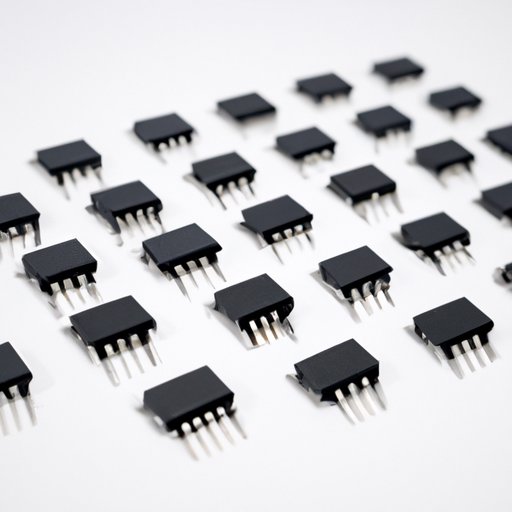
Title: Exploring Purchasing Models for the Latest Integrated Circuit (IC) Device ComponentsIntroduction (100 words) Integrated circuits (ICs) have revolutionized the electronics industry, enabling the development of smaller, faster, and more efficient devices. As technology advances, the demand for the latest IC device components continues to grow. To meet this demand, various purchasing models have emerged, offering different benefits and challenges. In this article, we will explore the purchasing models for the latest IC device components, providing insights into their advantages, disadvantages, and suitability for different scenarios.1. Traditional Distribution Model (200 words) The traditional distribution model has been the backbone of the electronics industry for decades. In this model, manufacturers sell their IC device components to distributors, who then sell them to customers. Distributors act as intermediaries, providing a wide range of components from multiple manufacturers, offering convenience and flexibility to customers. They also handle logistics, inventory management, and technical support.Advantages: - Wide product range: Distributors offer a vast selection of IC device components from various manufacturers, allowing customers to find the right components for their specific needs. - Consolidated purchasing: Customers can source multiple components from a single distributor, simplifying the procurement process and reducing administrative overhead. - Technical support: Distributors often provide technical expertise, assisting customers in selecting the most suitable components and troubleshooting issues.Disadvantages: - Higher costs: Distributors add a markup to the component prices, increasing the overall cost for customers. - Longer lead times: As distributors act as intermediaries, the time taken for components to reach customers may be longer compared to other purchasing models. - Limited control: Customers have limited control over the supply chain, relying on distributors for inventory management and order fulfillment.2. Direct Manufacturer Model (200 words) In the direct manufacturer model, customers purchase IC device components directly from the manufacturers. This model eliminates the need for intermediaries, allowing for a closer relationship between customers and manufacturers.Advantages: - Cost savings: By eliminating the distributor's markup, customers can potentially obtain IC device components at lower prices. - Faster lead times: Direct purchasing from manufacturers reduces the time taken for components to reach customers, as there are no intermediaries involved. - Enhanced control: Customers have more control over the supply chain, enabling better visibility and coordination.Disadvantages: - Limited product range: Manufacturers may offer a limited selection of components compared to distributors, restricting customers' options. - Higher order quantities: Some manufacturers have minimum order quantity requirements, making it challenging for customers with smaller-scale projects. - Lack of technical support: Direct purchasing may not come with the same level of technical support as distributors, requiring customers to rely on their own expertise or seek assistance elsewhere.3. Online Marketplaces (200 words) The rise of e-commerce has led to the emergence of online marketplaces specializing in electronic components. These platforms connect customers directly with sellers, which can include both manufacturers and distributors.Advantages: - Competitive pricing: Online marketplaces foster competition among sellers, leading to competitive pricing and potential cost savings for customers. - Wide product range: Many online marketplaces offer a vast selection of IC device components from various sellers, providing customers with numerous options. - Convenience: Customers can browse, compare, and purchase components from the comfort of their own homes or offices, saving time and effort.Disadvantages: - Quality concerns: Online marketplaces may have sellers of varying reputations, making it crucial for customers to research and verify the reliability and authenticity of the components. - Limited technical support: While some online marketplaces offer customer support, it may not be as comprehensive as that provided by distributors. - Potential counterfeit products: The risk of purchasing counterfeit IC device components exists on online marketplaces, necessitating caution and due diligence.4. Subscription-based Model (200 words) A relatively new purchasing model gaining traction is the subscription-based model. In this model, customers pay a recurring fee to access a range of IC device components, similar to a subscription service.Advantages: - Cost predictability: Subscription-based models offer fixed monthly or annual fees, allowing customers to budget and plan their expenses more effectively. - Flexibility: Customers can access a wide range of components without committing to large upfront costs or minimum order quantities. - Regular updates: Subscribers often receive updates on the latest IC device components, ensuring they stay up-to-date with the latest technological advancements.Disadvantages: - Limited ownership: Subscribers do not own the components they use, which may not be suitable for customers with specific ownership requirements. - Dependency on the provider: Customers rely on the subscription service provider for the availability and quality of components, which may pose risks if the provider faces issues or discontinues the service. - Potential cost inefficiency: Depending on the frequency of component usage, a subscription-based model may not always be cost-effective compared to other purchasing models.Conclusion (100 words) The purchasing models for the latest IC device components offer different advantages and disadvantages, catering to diverse customer needs. The traditional distribution model provides convenience and technical support but comes with higher costs. Direct manufacturer purchasing offers potential cost savings and faster lead times but may limit product options. Online marketplaces provide competitive pricing and convenience but require caution regarding quality and authenticity. Subscription-based models offer cost predictability and flexibility but may not suit customers with specific ownership requirements. Understanding these purchasing models empowers customers to make informed decisions when procuring the latest IC device components.